Hiking the Montagne de Lure in Haute-Provence
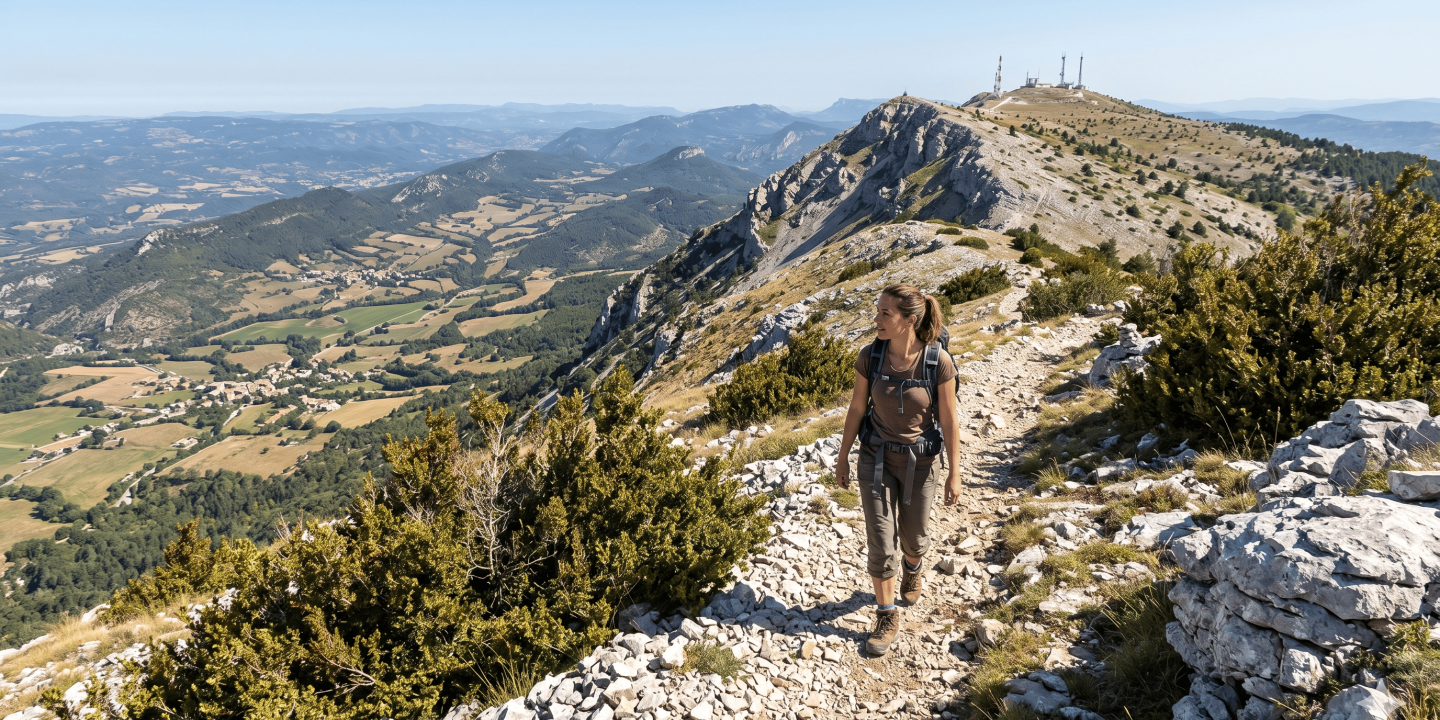
A sun-bleached limestone ridge, beech forests that turn russet as early as September, and at the very top, a 360° panorama embracing the Alps, the Luberon, and Mont Ventoux. Are you looking for a beautiful, out-of-the-ordinary hike in Haute-Provence? The Montagne de Lure, the little sister of Mont Ventoux, peaks at an altitude of 1,826 meters in the Alpes-de-Haute-Provence and is just waiting for your hiking boots.
A Peak between Provence and the Southern Alps
The Montagne de Lure forms a long east-west ridge, stretching for 42 kilometers between the Durance Valley and Mont Ventoux. Classified as a UNESCO Biosphere Reserve and part of the Natura 2000 network, it belongs to the same geological formation as the Plateau d'Albion and its famous neighbor. Its summit, the Signal de Lure, overlooks the Pays de Forcalquier, the Jabron Valley, and, on a clear day, stretches from the snow-capped peaks of the Écrins all the way to the Mediterranean. The sun-drenched southern slope smells of thyme and lavender. The steeper northern slope plunges into dense forests of beech and fir trees. This contrast between the sunny and shady sides gives the mountain a wealth of landscapes rarely found in a single massif. The 5-star campsite L'Hippocampe, located in Volonne about thirty kilometers from the foot of Lure, is a convenient starting point for exploring the entire area.
Remarkable Biodiversity: Rare Wildlife and Endemic Flora
Look up, listen closely: the Montagne de Lure is home to a diversity of species that attracts naturalists and curious visitors alike. In terms of wildlife, chamois, red deer, roe deer, and even wolves roam the wooded slopes. In the sky, golden eagles, peregrine falcons, and short-toed snake eagles soar over the ridges, but the real local star is the Orsini's viper: Europe's smallest viper, harmless, discreet, and found in only 10 sites in France, with Lure hosting one of its main populations. As for flora, Bertoloni's columbine, an endemic species of the Prealps, blooms in the scree beneath the ridge. You can also find a few rare specimens of the Spanish juniper (genévrier thurifère), a centuries-old tree threatened with global extinction. And with over 130 recorded butterfly species—nearly half of all species found in France—the high-altitude meadows of Lure are a rare observation ground in Europe.
Hikes and Activities: Summer and Winter
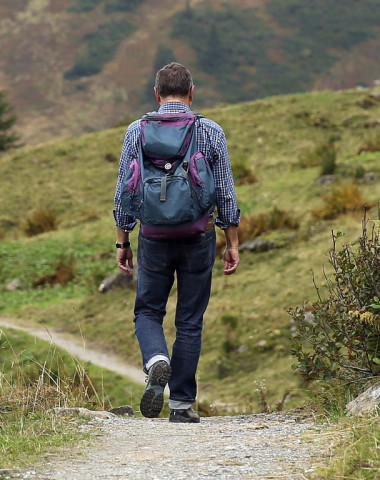
Whatever your fitness level, the Montagne de Lure offers trails for everyone. Among the must-dos:
- The Lure Ridges (Les crêtes de Lure): A 13 km loop starting from the resort, offering panoramic views of Mont Ventoux, the Vercors, and the Digne Prealps.
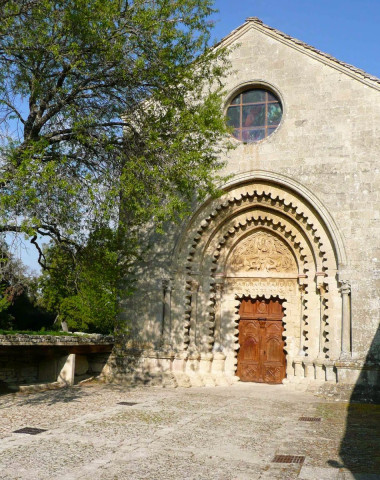
- Notre-Dame de Lure Abbey: A family-friendly walk through a forest of century-old beech trees to this 12th-century Romanesque chapel, a listed historical monument nestled at an altitude of 1,200 meters.
- The Lure Plant Trail: Three walking routes dedicated to aromatic and medicinal plants, the legacy of the traveling herbalists who roamed the mountain as early as the 17th century. Cyclists are well acquainted with the ascent from Saint-Étienne-les-Orgues: an 18 km climb with a 5.7% average gradient and over 1,000 meters of elevation gain. In winter, the Lure resort—one of the first ski resorts in Provence (opened in 1937)—offers ski slopes, snowshoeing, sledding, and play areas between 1,600 and 1,850 meters above sea level.
The Mountain of Giono and the Stars
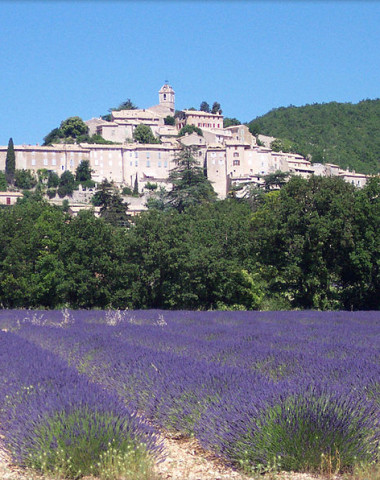
Jean Giono, a native of Manosque, explored the Montagne de Lure on foot and by bicycle his entire life. He nicknamed it the "Blue Mountain" and set some of his novels there, including Regain (Second Harvest), as well as the famous film Crésus starring Fernandel, which was shot on the Contadour plateau. The Jean Giono Route, a 152 km tourist itinerary, completely circles the massif, passing through Banon, Simiane-la-Rotonde, and the Jabron Valley.
Another asset of Lure is its night sky of rare purity, free from light pollution. The Astronomical Society of Lure organizes observation nights at the Marc Bianchi Observatory, located at the summit. An evening with your head in the stars, right in the heart of the Provence-Alpes-Côte d'Azur region: it is easy to understand why so many visitors keep coming back.
Preparing Your Stay at the Foot of Lure
The Montagne de Lure is accessible from Volonne in less than 40 minutes via the road to Forcalquier and then Saint-Étienne-les-Orgues. The D113 road then winds up to the summit along the southern slope. Bring water, good walking shoes, and a windbreaker: on the ridges, even in the middle of summer, it is often windy.
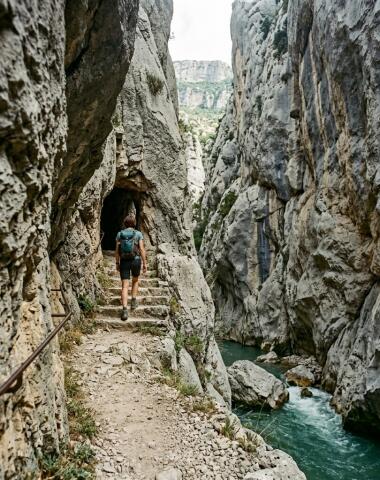
To fully enjoy the region over several days, renting a mobile home in Provence at the L'Hippocampe estate allows you to combine the discovery of Lure with the Gorges du Verdon, the Provençal Colorado, or the villages of Forcalquier and Banon. After a day at high altitude, returning to the banks of the Durance river—between a heated pool and dinner on the terrace facing the hills—is sure to leave a lasting impression.
The United States in the heart of Provence
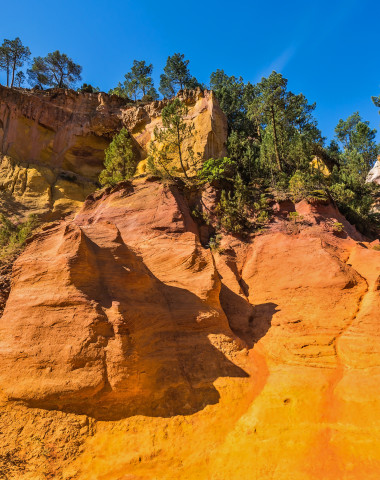
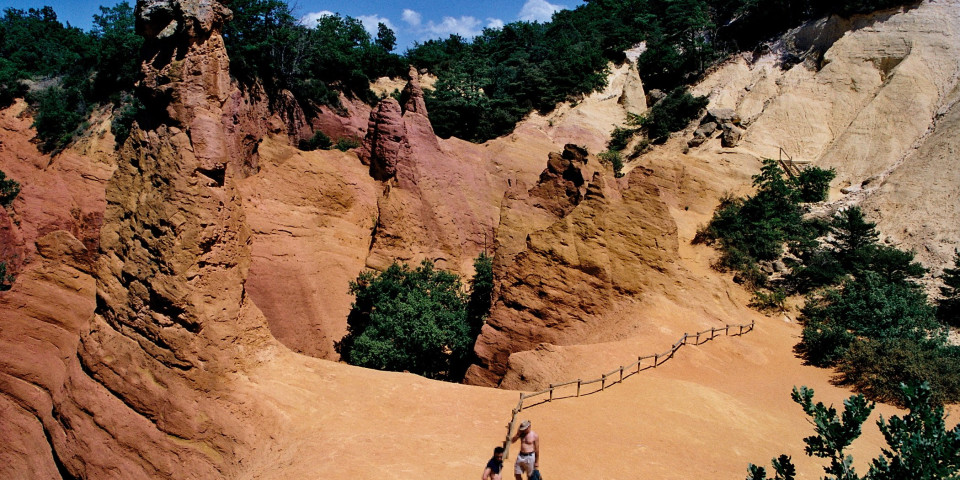
Situated in the heart of Provence in Rustrel, the Colorado Provençal, promises a breathtaking landscape. These quarries, shaped by man and nature, were classified as a historical monument in 1930. This exceptional natural site will surprise you with its palette of colours. In this landscape, which looks like a Colorado, you can distinguish yellow, red, brown, green, purple and orange ochres.
Let yourself be charmed by all the shapes and colours that bear witness to an industrial past. This man-made landscape is the result of the heavy exploitation of ochre in the region since the 13th century.
A paradise for hikers, during your exploration you will wander between vegetation, cliffs, rock formations and chimneys... You will also be able to see here and there some remains of this industrial area (equipment, pipes...)
Visit the Colorado Provençal for a unique experience near our 5-star campsite.
Go out and explore!
Montagne de Lure , Saint-Etienne-les-Orgues